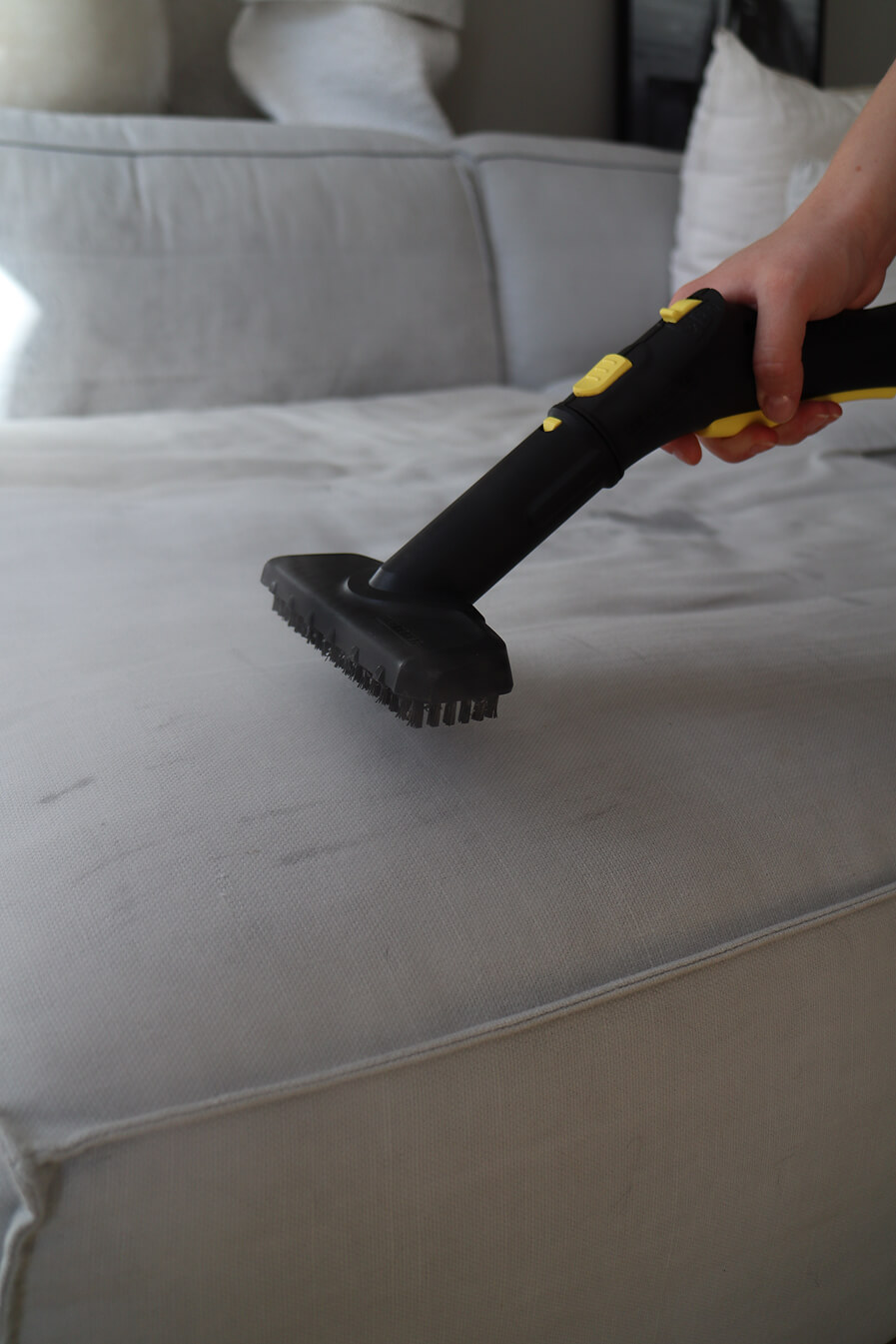
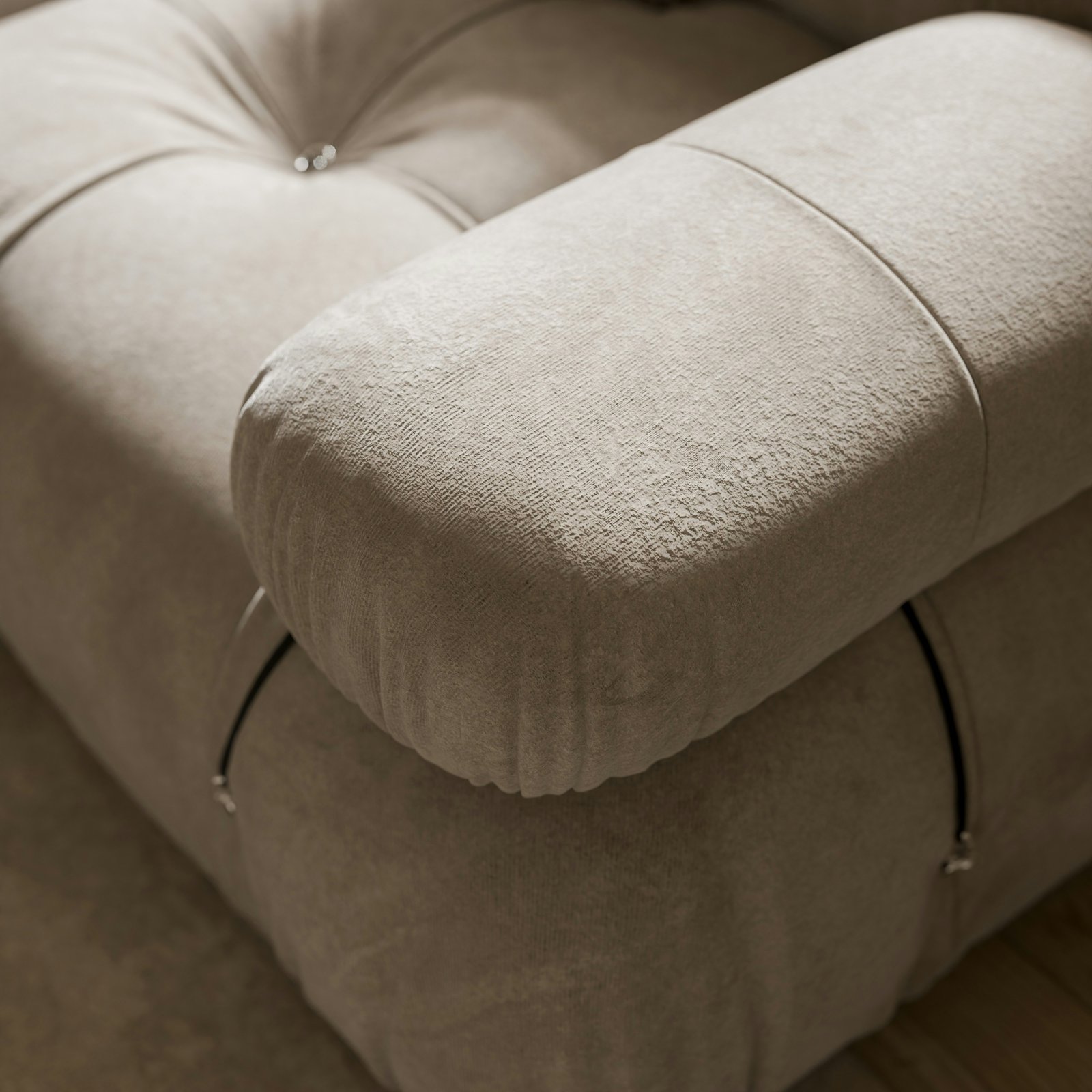
Suede — technically leather with a brushed, velvety nap — needs a very different approach than fabric or smooth leather. The biggest danger is water: the moment suede gets wet, it almost always leaves a dark ring that’s hard to remove. That’s why most suede stains are best treated dry.
What you’ll need
- A suede brush (with rubber or brass bristles, made specifically for suede)
- A suede eraser
- Talcum powder or cornstarch
- A clean, dry cloth
Step by step
- Let fresh stains dry completely first. Don’t rub with a cloth right away — that pushes dirt deeper into the nap and can cause a ring.
- Brush in one direction with a suede brush. This removes loose dust and dirt and restores the nap evenly, instantly making the sofa look fresher.
- Fresh grease stain? Sprinkle some talcum powder or cornstarch on the spot right away and let it sit for 15 to 30 minutes. The powder draws the grease out of the nap. Brush away gently afterwards.
- Dry, surface-level stain? Use a suede eraser and rub gently in small circular motions — just like a regular eraser on paper.
- Already have a water ring? Brush very lightly in the direction of the nap, or rub gently with very fine sandpaper (600 grit or higher). This sometimes fades a ring, though it isn’t guaranteed to work every time.
- Finish by brushing the whole sofa once more so the nap feels even and soft all over.
A note of caution
Never use water, soap or a damp cloth directly on suede — not even “just a little bit.” That’s the fastest way to create a permanent, dark stain. Always test any technique on an inconspicuous spot first, such as the underside of a cushion.
When should you call in a professional?
For larger stains, stubborn dirt, or a whole sofa that’s due for a refresh, professional help is the smart choice. We work with specialist dry-cleaning products that clean deeply without ever getting suede wet. Check out our furniture cleaning service or get in touch for free advice.